Paints & materials

Rangavelo brings paints, brushes, canvases and creative kits into one considered material conversation.

Materials in a connected kit

Paints and colour studies
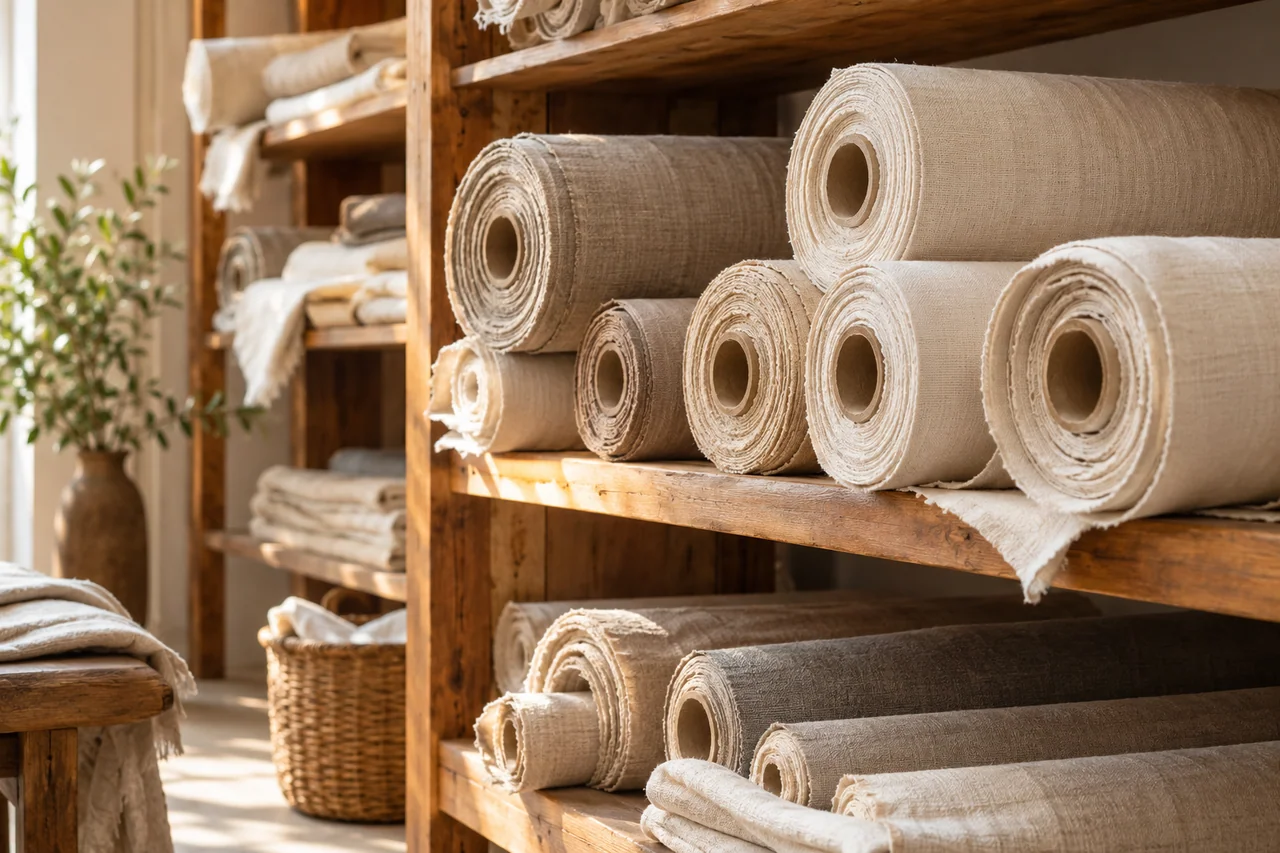
Rolled linen canvases on timber shelving

Explore materials through the way colour behaves: transparent layers, opaque passages, drying time and the marks left by a brush. Medium and surface need to be considered together. A small colour study can reveal whether a combination suits the intended work before a more substantial piece is started.

When comparing paints, describe the effect rather than relying on a colour name alone. Transparency, coverage and handling can matter as much as hue. Product guidance and a small trial help connect those properties to the intended surface and the way the work will be layered.
Brushes, paper and canvas

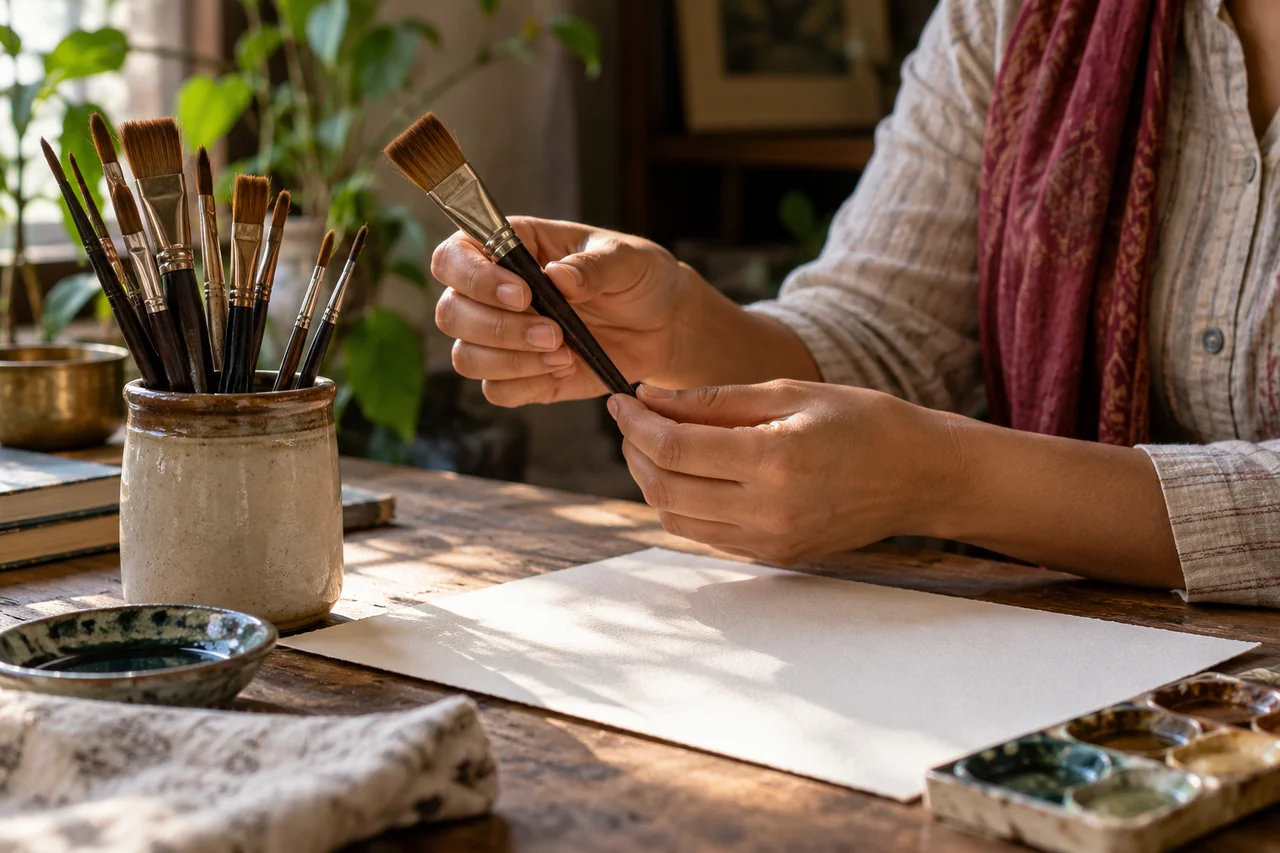
Hands choosing a brush width for a paper study

A brush has a job beyond its size. Shape, resilience and the way it holds the chosen medium affect the mark. Paper texture and canvas preparation matter just as much. Describe your working method and surface so the material discussion can connect the tool to the result you are trying to explore.

Brush and surface choices are easier to discuss together. A rough texture can change the mark and the wear on a tool. Ask about the relationship between the medium, the intended scale and the preparation required, and keep the relevant product instructions with the materials.

Considered creative kits

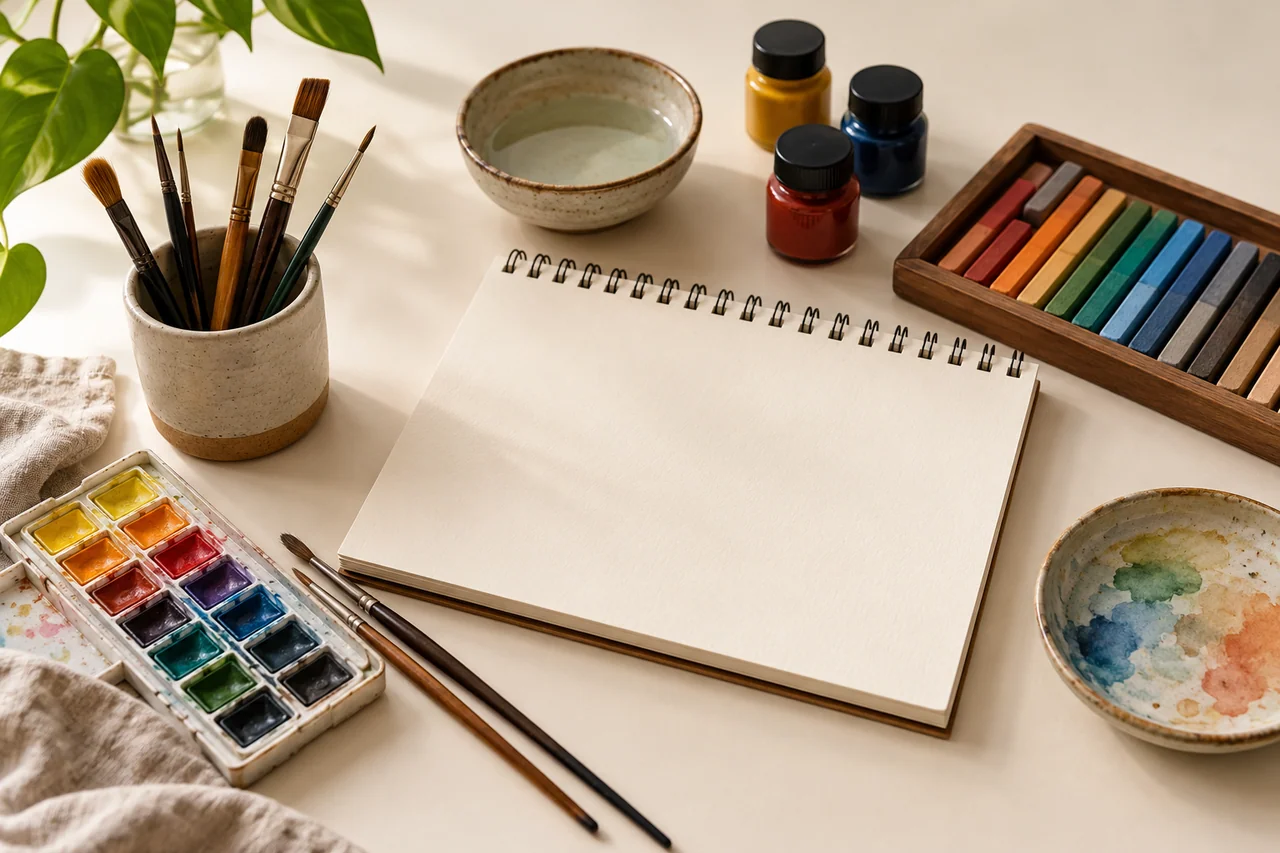
Tidy art kit components arranged on cream background

A useful kit brings together compatible materials for a defined kind of work. Paint, a suitable surface and a manageable set of tools are easier to understand when their relationship is clear. Discuss experience, intended activity and the materials already available before deciding what belongs in a kit.

For a shared activity, kit planning includes the workspace and how materials move between participants. Separate individual tools from shared containers and consider how cleaning will happen. Confirm exact contents directly so everyone understands what is part of the proposed kit and what needs to be prepared separately.

Compare the purpose, preparation and scope of each part of the work.

Artist testing transparent washes on blank practice paper

Choose brushes by the mark

Think about broad coverage, edges, small details and controlled lines. One brush may perform several tasks, while a specialised shape needs a clear purpose. Rinse or clean it according to the medium and avoid leaving a loaded brush to dry.

Start with your material question

Tell Rangavelo what you plan to make, the surface you are using and the materials already on your table. For a kit discussion, include experience, intended activity and the number of participants. Exact components and current arrangements are clarified directly through the contact details below.

Discuss your materials